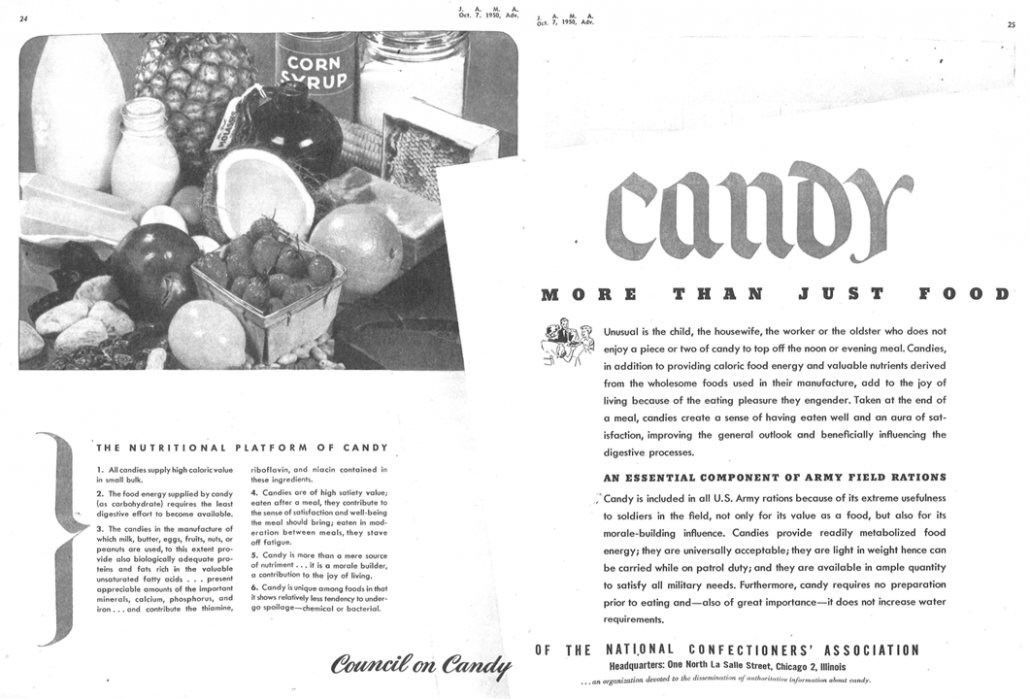
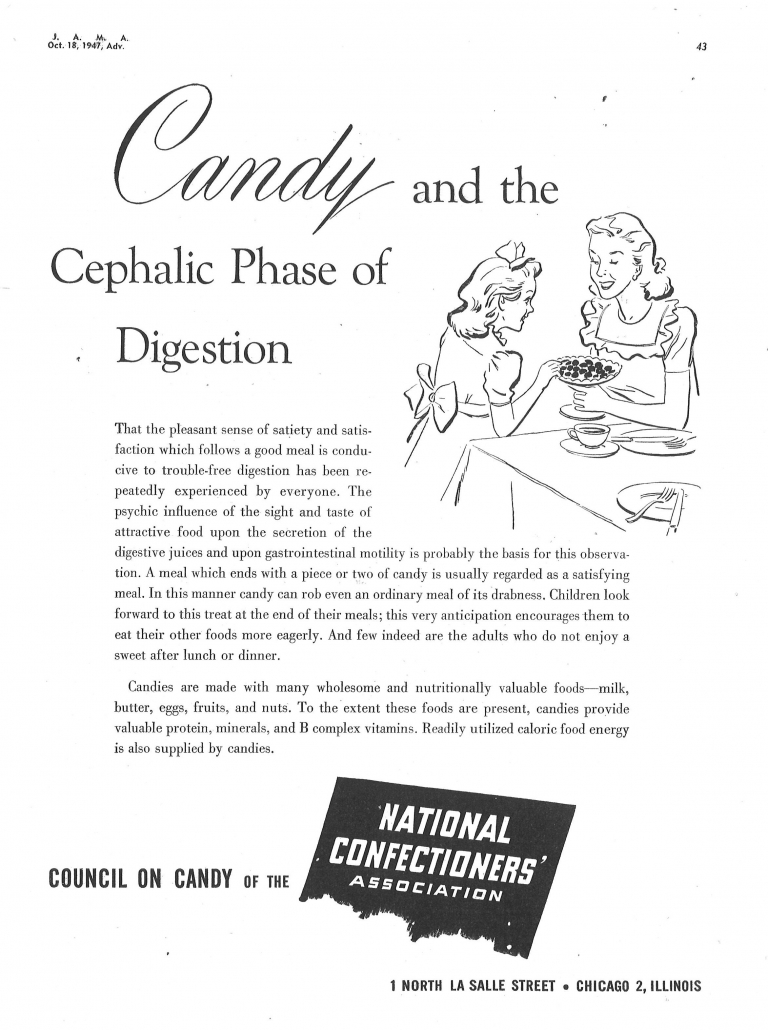
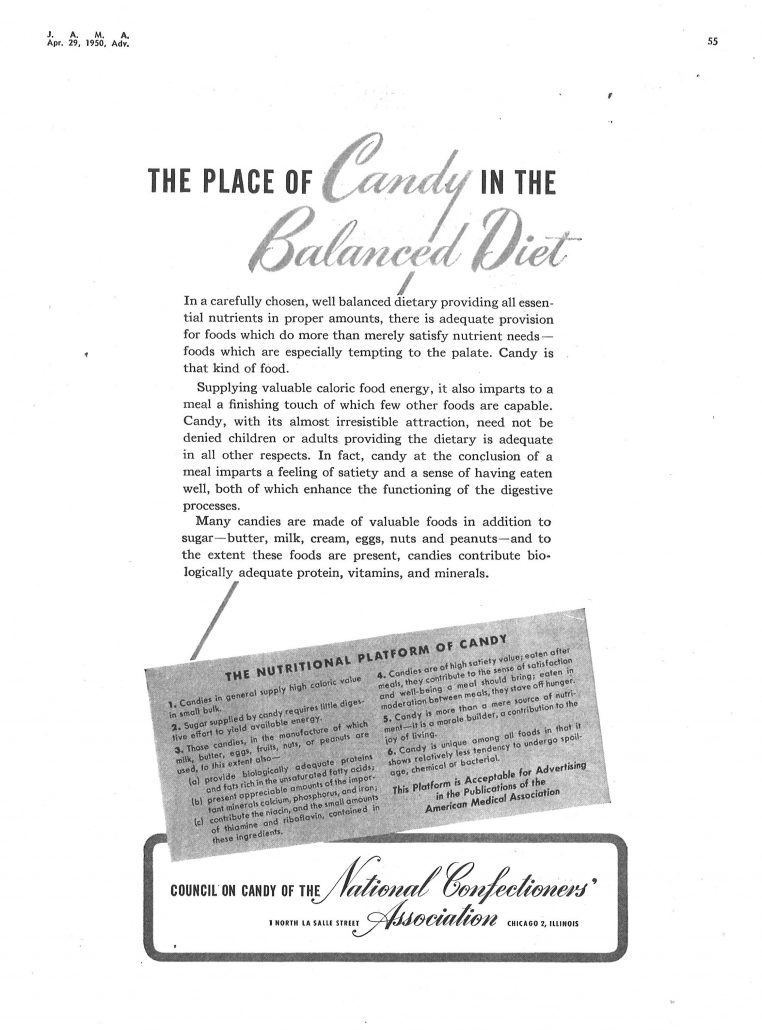
“candy
MORE THAN JUST FOOD”
Advertisement by the Council on Candy of the National Confectioners’ Association
Journal of the American Medical Association
October 7, 1950
“Unusual is the child, the housewife, the worker or the oldster who does not enjoy a piece or two of candy to top off the noon or evening meal. Candies, in addition to providing caloric food energy and valuable nutrients derived from the wholesome foods used in their manufacture, add to the joy of living because of the eating pleasure they engender. Taken at the end of a meal, candies create a sense of having eaten well and an aura of satisfaction, improving the general outlook and beneficially influencing the digestive processes…”
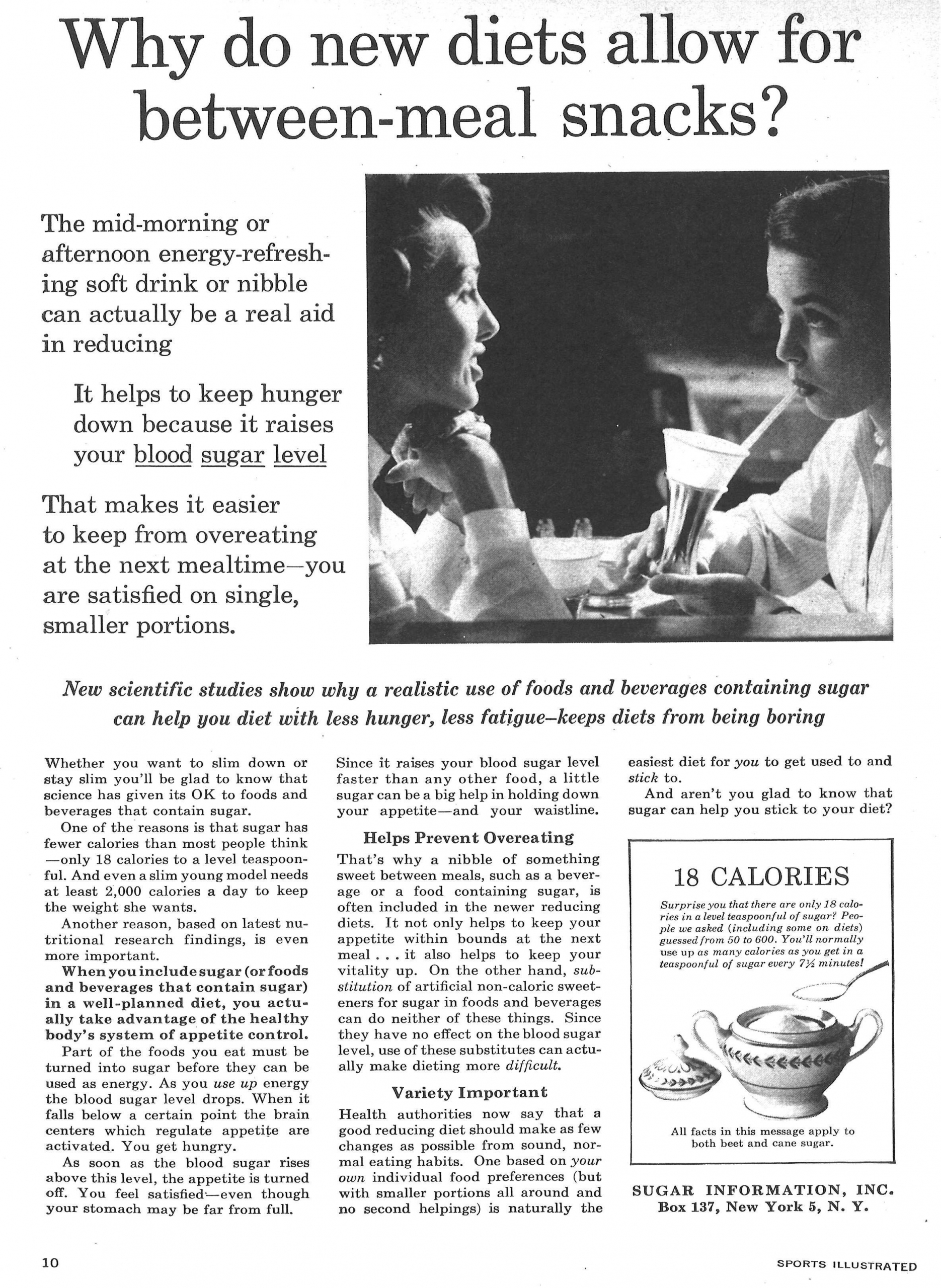
“Why do new diets allow for
between-meal snacks?
New scientific studies show why a realistic use of foods and beverages containing sugar
can help you diet with less hunger, less fatigue-keeps diets from being boring”
Advertisement by Sugar Information, Inc. for sugar
Sports Illustrated
May 2, 1955
“Whether you want to slim down or stay slim you’ll be glad to know that science has given its OK to foods and beverages that contain sugar.
“…When you include sugar (or foods and beverages that contain sugar) in a well-planned diet, you actually take advantage of the healthy body’s system of appetite control. Part of the foods you eat must be turned· into sugar before they can be used as energy. As you use up energy the blood sugar level drops. When it falls below a certain point the brain centers which regulate appetite are activated. You get hungry. As soon as the blood sugar rises above this level, the appetite is turned off. You feel satisfied — even though your stomach may be far from full .
“Since it raises your blood sugar level faster than any other food, a little sugar can be a big help in holding down your appetite-and your waistline.
“18 CALORIES
Surprise you that there are only 18 calories in a level teaspoonful of sugar? People we asked (including some on diets) guessed from 50 to 600. You’ll normally use up as many calories as you get in a teaspoonful of sugar every 7½ minutes!”
“All facts in this message apply to both beet and cane sugar.”
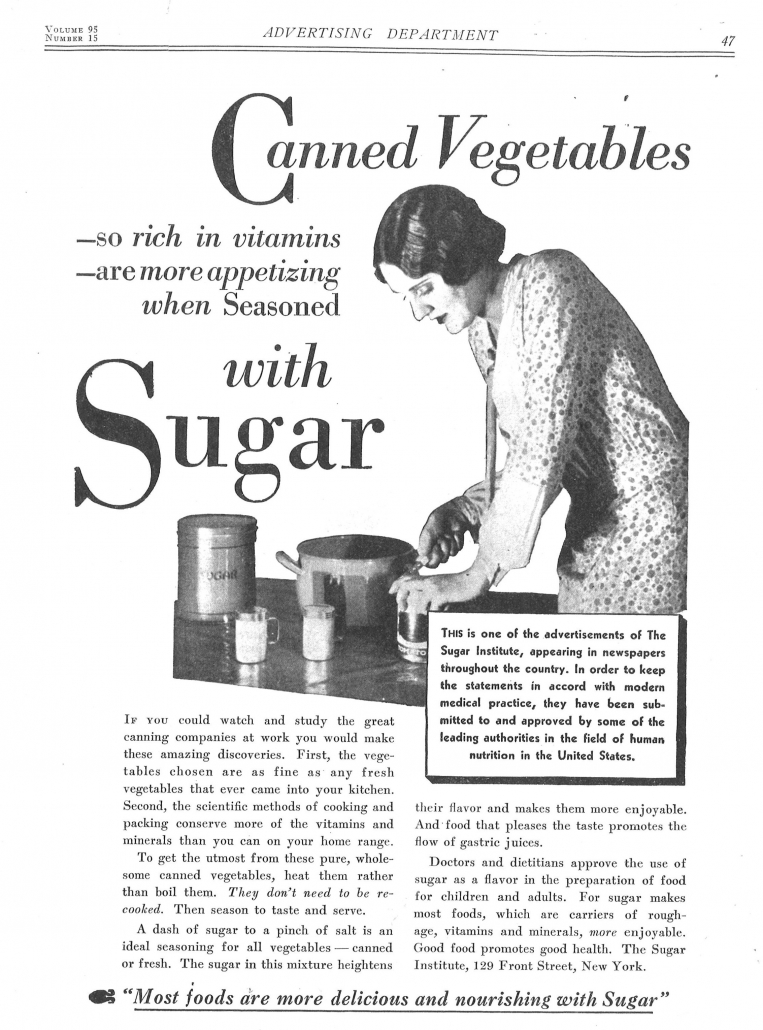
Curator’s note: This advertisement was one of a series in consumer magazines purchased by the sugar industry in the 1950s, along the lines of the industry’s Sugar Institute in the 1930s and its Sugar Research Foundation in the 1940s.